

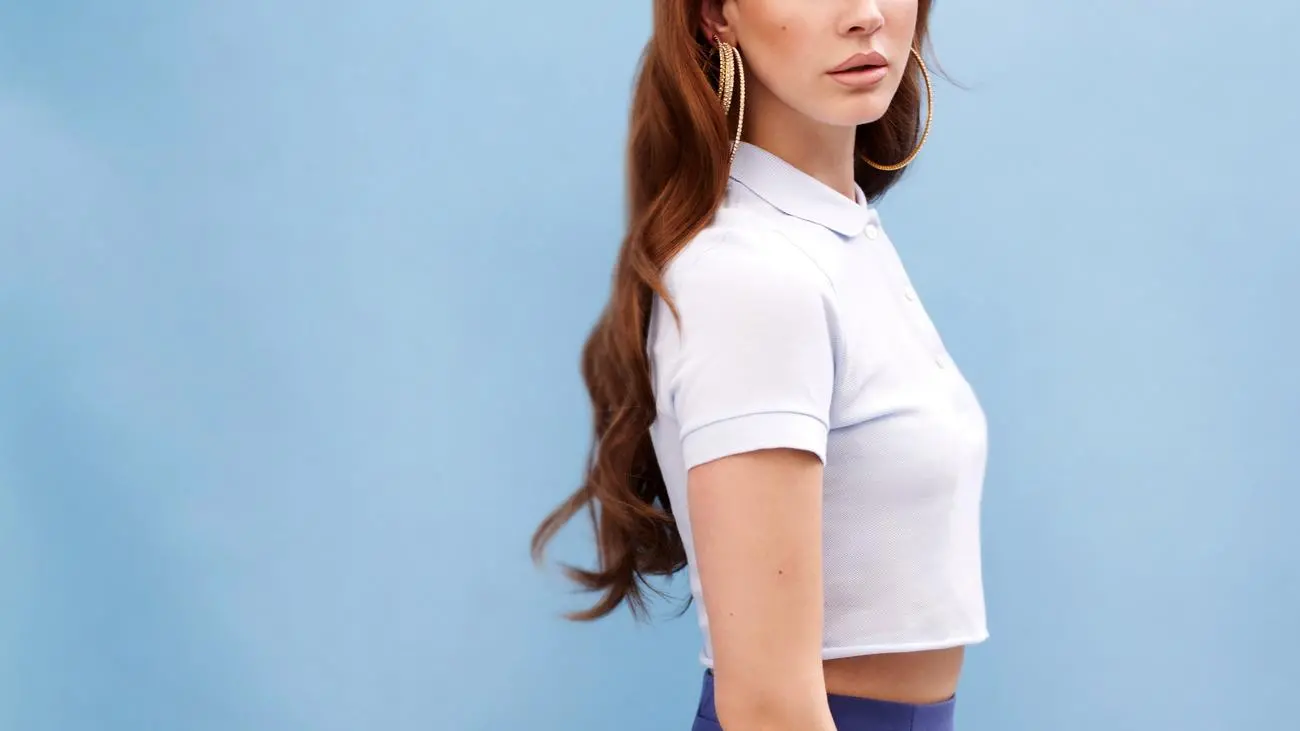
Lana Del Rey has long been a figure of intrigue and controversy, often blending the image of a tragic Hollywood starlet with a modern pop sensibility. In a recent interview with Die Zeit, the singer directly addressed a common critique: that she cultivates a persona reminiscent of Vladimir Nabokov's Lolita. 'I don't play a Lolita role,' she stated firmly. 'I like things from the past because they take me back. Still, I don’t draw as much inspiration from them as you might think. Old Hollywood cinema is just one influence among many, a traditional makeup I wear. But I like how these films are made: so epic, so captivating. I wish real life were the same.'
This statement offers a rare glimpse into how Del Rey views her own artistry. Born Elizabeth Woolridge Grant in New York City in 1985, she rose to fame in 2011 with the single 'Video Games,' which immediately established her signature sound—a blend of trip-hop, baroque pop, and melancholic lyrics. Her debut album Born to Die (2012) was a commercial success but also drew criticism for its perceived glamorization of toxic relationships and its retro, sometimes submissive aesthetic. Critics often accused her of pandering to a male gaze or of appropriating a 'gangster Nancy Sinatra' look.
Over the years, Del Rey has evolved both musically and personally. Albums like Ultraviolence (2014), produced by Dan Auerbach, explored darker rock territories, while Honeymoon (2015) returned to orchestral lushness. Lust for Life (2017) marked a shift toward optimism and political awareness, featuring collaborations with The Weeknd and A$AP Rocky. Norman Fucking Rockwell! (2019) was hailed by many as her masterpiece, earning Grammy nominations for Album of the Year and Best Alternative Music Album. Its title track and songs like 'Mariners Apartment Complex' showcased a more self-assured, witty songwriter.
The 'Lolita' accusation has dogged Del Rey since the beginning. Her early music videos often featured childlike innocence juxtaposed with overt sexuality—images of her in pigtails, cherry blossoms, and vintage swimwear. She referenced Lolita explicitly in the song 'Off to the Races' ('She's a little Lolita, I know'). However, Del Rey has consistently argued that her work is autobiographical and deeply personal, not a manufactured fantasy. In 2020, she addressed the criticism head-on in a now-famous Instagram post, questioning why she was singled out for themes of vulnerability and submission when other female artists explored similar ideas. 'I'm not a Lolita,' she wrote. 'I'm a woman who writes about her life.'
The Die Zeit interview reinforces this stance. By emphasizing that Old Hollywood is merely an aesthetic choice—'a traditional makeup'—she distances herself from the notion that she is performing a sexualized child role. Instead, she frames her use of vintage imagery as a longing for cinematic grandeur in a mundane reality. 'I wish real life were the same,' she says, suggesting that her art compensates for a world that lacks epic romance and drama.
This perspective aligns with her musical evolution. On Chemtrails over the Country Club (2021) and Blue Banisters (2021), Del Rey explored more intimate, folksy sounds, singing about her family, her hometown, and her friendships. The cinematic strings of earlier albums gave way to piano ballads and Americana. Critics noted a new rawness, as if she had stripped away some of the vintage veneer to reveal the person underneath. Songs like 'White Dress' and 'Wildflower Wildfire' delve into her teenage years and her complicated relationships with fame.
Yet the nostalgia persists. Even in her latest album Did You Know That There's a Tunnel Under Ocean Blvd (2023), Del Rey references old Hollywood—'A&W' samples a classic pop tune, and the album art features a faded photo of a woman. She seems unable to escape her own mythology. In many ways, this tension between authenticity and performance is the core of her appeal. Does she really long for the 1950s, or is she using that era as a symbol for something else—perhaps a time when emotions were larger than life, and problems could be solved with a swelling string section?
Del Rey's comments also touch on the broader debate about artistic persona. Every pop star constructs an image, but few have been as scrutinized as hers. Male artists like David Bowie or Bruce Springsteen adopted personas without facing charges of inauthenticity. For a female artist, however, the line between self-expression and performance is policed more harshly. Del Rey's insistence that she is not playing a role—or at least not a Lolita role—reflects a desire to be taken seriously as a songwriter and storyteller, not just as a provocateur.
Her reference to 'traditional makeup' is telling. Cosmetics in the 1960s were heavy, but they also symbolized a certain glamour—a mask that women were expected to wear. Del Rey admits she wears a mask, but she argues it is her choice, one that connects her to a film tradition she admires. This is not the mask of a naughty schoolgirl but of a cinematic heroine, flawed and tragic. 'I don't get as much inspiration from the past as you think,' she says, perhaps implying that her current life, relationships, and observations are equally important. The vintage aesthetic is a tool, not a prison.
To understand the full context, one must consider Del Rey's upbringing. She grew up in Lake Placid, New York, and attended boarding school before moving to New York City. She struggled with alcoholism in her teens and later credited her sobriety to finding music. Her early work was raw and confessional, and she has spoken about how her songwriting saved her. The nostalgia, then, might be a way to escape a painful present or to sanctify her own history. The 'old Hollywood' is not just a style; it is a way to elevate her own narrative to the level of myth.
Moreover, the reaction to her persona often says more about society than about Del Rey. Criticisms of her 'Lolita' image are rooted in a discomfort with female sexuality that is both innocent and knowing. Del Rey deliberately blurs those boundaries, and that makes people uneasy. Her music challenges the idea that women must grow out of girlhood in a straight line, or that vulnerability must be hidden. She wears her heart on her sleeve, even if it is a lace sleeve from 1963.
Her career remains robust. She continues to sell out arenas and earn critical praise. She has mentored younger artists like Billie Eilish and has been cited as an influence by many. In 2023, she headlined festivals around the world. The interview with Die Zeit came as she promoted her latest album, which has been described as her most personal yet. The fact that she still has to defend her artistic choices speaks to the lasting power of her early image. But she seems determined to redefine herself on her own terms.
In the end, Del Rey's statement—'I don't play a Lolita role'—is an act of reclamation. She is taking control of the narrative. The Old Hollywood makeup is a costume she can put on and take off. The tragic heroine is a character she writes, not one imposed on her. By wishing real life were as epic as the movies, she reveals a deep romanticism that has always underlain her work. It is not about pretending to be a victim or a seductress; it is about infusing daily existence with art. As she once sang, 'Life is beautiful, but you don't have a clue.' She wants to be the one who knows, and who shows it through the lens of a vintage camera.
For those who have followed her journey, this interview is another milestone. Del Rey has moved from being a voice of tragic love to a voice of complex womanhood. She still loves the old films, but she is making her own movie now—one with a clearer vision. And if that vision includes lipstick and a sad smile, so be it. She is not Lolita. She is Lana Del Rey, an artist who uses the past to illuminate the present.
Source: DIE ZEIT News