

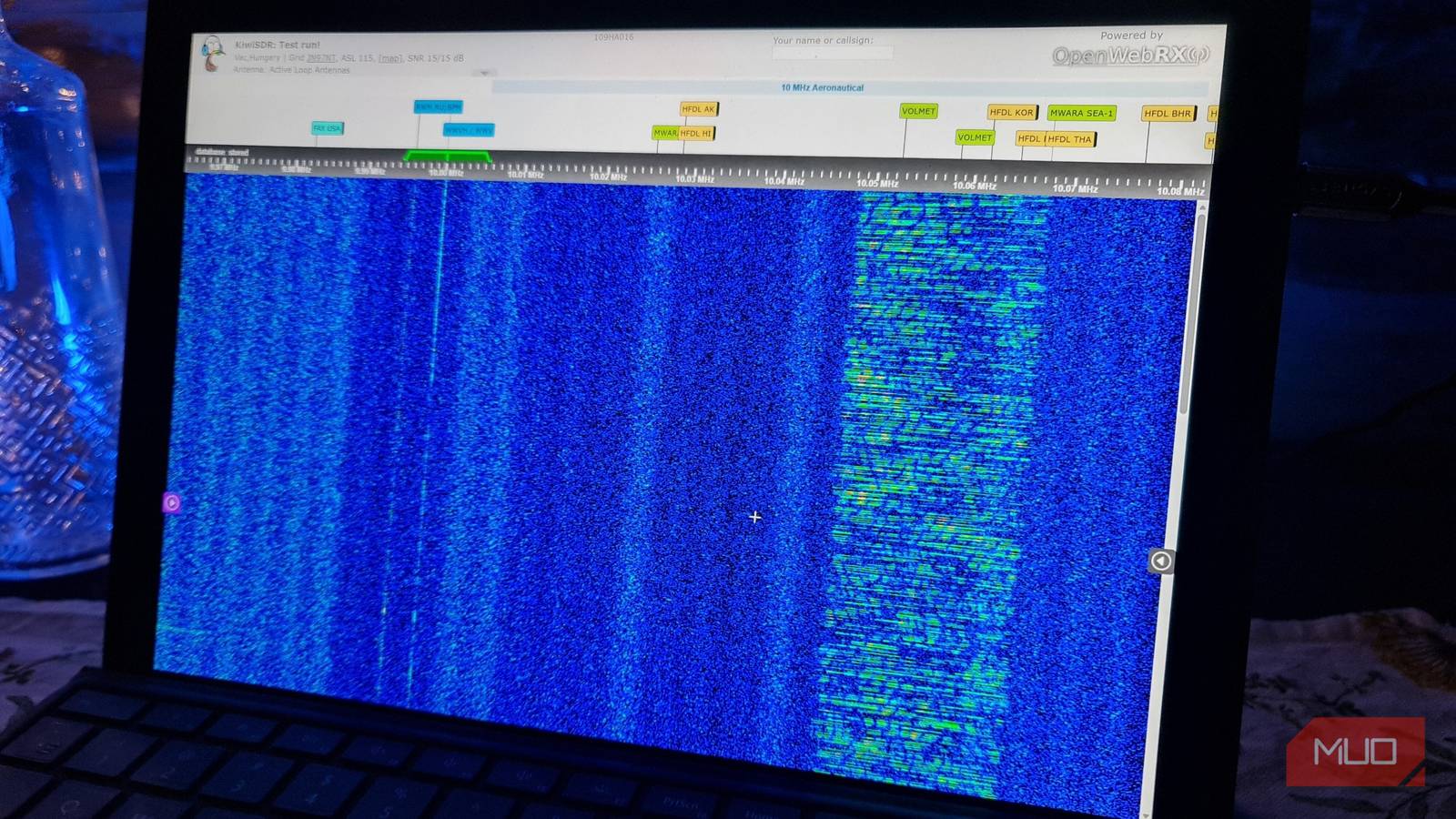
Shortwave radio has always been a haven for strange and unexplained transmissions. Unlike local FM or AM stations, shortwave signals can bounce off the ionosphere and travel across continents. This unique propagation makes it possible to hear signals from thousands of miles away – including some that have fuelled decades of internet folklore.
One of the most famous is UVB-76, better known as the Russian Buzzer. Tune into 4625 kHz in upper sideband (USB) mode on any online KiwiSDR, and you'll hear a monotonous buzzing tone that repeats endlessly. The signal has been broadcasting since at least the 1970s. Occasionally, the buzzing is interrupted by a Russian voice reading short phrases or numbers. The purpose remains officially unknown, though it's widely believed to be a Russian military communication channel. The fact that someone is keeping this station alive, day after day, without explanation is what makes it so unsettling.
Another chilling transmission is the 'Skyking' message. This is part of the US High Frequency Global Communications System (HFGCS). The phrase 'Skyking, Skyking, do not answer' is an encrypted broadcast used for emergency action messages. You can try listening on frequencies like 8992 kHz or 11175 kHz USB. While it's not always active, recordings from the early 2010s have turned the Skyking into a legend among radio enthusiasts. The transmission is calm and matter-of-fact, which only adds to the eerie feeling that you are listening in on something secret.
Shortwave also hosts 'number stations' – repeating broadcasts of groups of numbers or letters read by synthetic or real voices. The most well-known for English speakers is E11, also called 'Oblique', which transmits on different frequencies depending on the day of the week. It usually airs numbers like '0, 1, 2, 3, 4, 5, 6, 7, 8, 9' or longer sequences, often followed by 'end of message' or '00'. Number stations are generally believed to be used by intelligence agencies to communicate with spies. The monotone delivery, the lack of any identifiable context, and the knowledge that these signals are still active today combine to create a genuinely creepy listening experience.
Spanish-language number stations like HM01 (or MH01) mix voice numbers with bursts of digital data. They are easier to spot on a waterfall display because the digital bits create sharp patterns. HM01 can be heard on frequencies such as 9330, 10345, or 11435 kHz in AM mode. The station usually transmits in the evenings and has been tracked by hobbyists for years.
There are also utility signals that are less creepy but still fascinating. The time signal stations WWV (US) and CHU (Canada) broadcast the exact time using voice and ticking sounds. They serve as reliable reference points to calibrate your listening setup. Once you recognise the steady hum of a time signal, the weirder stations stand out more clearly.
The Pip (5448 kHz daylight, 3756 kHz night) and the Squeaky Wheel (5367 kHz daylight, 3363.5 kHz night) are two other Russian channels that produce repetitive tones. The Pip emits a single high-pitched 'pip' every second or so, while the Squeaky Wheel sends a two-tone squeak. Like the Buzzer, they occasionally carry voice messages. Their purpose is unknown but assumed to be related to military communications or jamming.
To listen to all these signals, you do not need a radio license or expensive equipment. The rx-tx.info SDR map lists hundreds of public receivers across the world. Purple pins indicate KiwiSDR receivers (good for tagged frequencies), green pins are OpenWebRX (noisier but flexible), and blue pins are WebSDRs (high research value). Choose a receiver that is currently in darkness because night enhances shortwave propagation. Then set the mode to USB (upper sideband) for most frequencies, or AM for time stations and some number stations. Tune to the listed frequency and watch the waterfall for unusual patterns.
The experience is raw and direct. You are hearing signals that have travelled through the atmosphere, often from military bases or secret facilities. The internet has turned these once-obscure transmissions into a form of modern folklore. Forums like the Priyom.org community track schedules and decode messages, but the core mystery – who is transmitting, and why – remains unsolved.
Listening to shortwave mysteries is not merely passive. It requires patience and a willingness to sit with static and noise. But the reward is the occasional moment of recognition: a voice cutting through the hiss, a pattern in the waterfall that matches a known signal, or the feeling that you have stumbled onto something that was never meant to be public. The weirdest part is that these signals are still broadcasting, still monitored by hobbyists, and still only half-explained. They are live artefacts of a hidden world, waiting for anyone with a browser and an internet connection to tune in.
Source: MakeUseOf News