

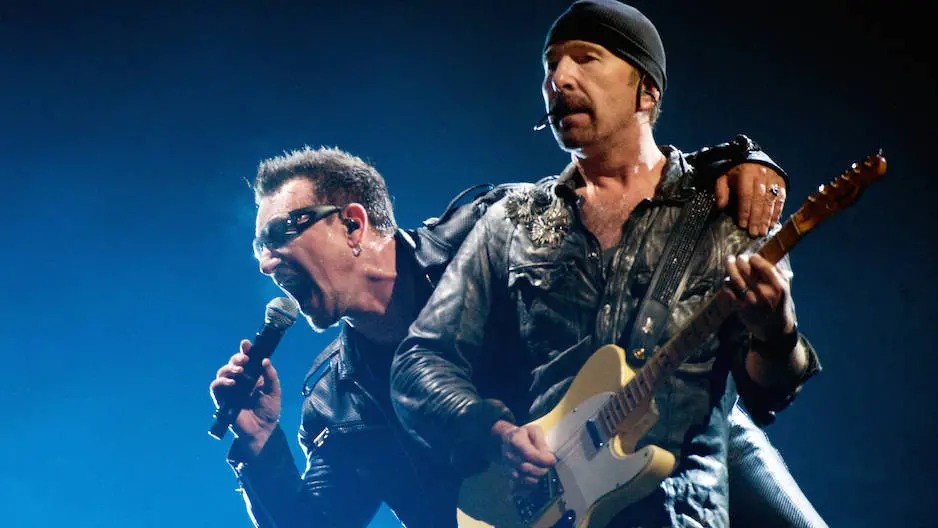
In a recent interview with BBC Radio 2, U2 guitarist The Edge opened up about the challenges of the pandemic, the separation from bandmate Bono, and his humorous struggles with modern technology. The conversation, which aired on September 10, 2020, provided a rare glimpse into the personal and professional dynamics of one of rock's most enduring bands.
The Decision: Love in California vs. Work in Dublin
Before the pandemic, U2 had been making significant progress on new material. The Edge explained that he and Bono were actively working on new songs. However, as lockdowns began to take effect worldwide, he faced a sudden and difficult choice: remain in Dublin to continue working with Bono, or travel to California to be with his wife. He chose the latter. 'In my opinion, it was definitely the right decision to go to my wife, because no two days later all flights to America were canceled,' he recalled.
This decision, while personally sound, created a geographical separation of thousands of miles between him and his creative partner. The distance forced them to rely on technology to maintain their collaboration—a technology that The Edge admits he is not as proficient in as many might assume.
The Unmasking of the Alleged 'Tech Genius'
The Edge, often perceived as the band's tech-savvy member, confessed that his reputation is largely undeserved. 'I am known as a technology genius!' he joked. 'But that's only because I know how to fix the printer. That's about the extent of my technological abilities.' When compared to other band members, he feels like a dilettante. 'To say that puts me on a whole different level than everyone else in the band should explain what you're dealing with,' he said. 'That's why it was sometimes really a challenge.'
The band turned to Zoom, the video conferencing service that became a lifeline for millions during the pandemic. However, the transition was far from smooth for The Edge. In one particularly amusing anecdote, he described trying to share a visual presentation during a Zoom call. He thought everything was working perfectly, but after the call ended, he realized his video had been off the entire time. 'Everyone was too polite to tell me that I was just a disembodied voice and they couldn't see anything at all… nobody stopped me, they all thought I was really shy or mysterious or whatever!' he said.
This incident highlights the awkwardness of virtual communication, even for seasoned performers. U2, known for their massive stadium shows and elaborate visual productions, had to adapt to a world where they couldn't even see each other.
U2's Creative Process During Lockdown
Despite the challenges, the band remained productive. In early May, The Edge returned to Dublin to resume working on songs with Bono. The creative energy that defined U2's early career is evidently still alive. The band's last studio album, Songs of Experience, was released in 2017, and fans have been eagerly awaiting new material. The Edge's comments suggest that the pandemic did not halt their progress, but rather forced a different mode of collaboration.
The article also mentions the upcoming reissue of U2's 2000 album All That You Can't Leave Behind, set for release on October 30, 2020. This album marked a return to a more straightforward rock sound after the experimental Pop and Zooropa eras. It was a massive commercial success, selling over 12 million copies worldwide and winning seven Grammy Awards. Songs like 'Beautiful Day,' 'Stuck in a Moment You Can't Get Out Of,' and 'Walk On' became anthems. The reissue likely includes remastered tracks, B-sides, and possibly live recordings.
The Edge's guitar work on that album, particularly on 'Where the Streets Have No Name' (though that song is from 1987's The Joshua Tree), is iconic. His signature delay-based, chiming sound helped define U2's identity. The article acknowledges this, stating that 'the reverb guitar of The Edge shot U2 directly into the stratosphere of pop.'
Background: U2's Career and The Edge's Role
U2 formed in Dublin in 1976. The band consists of Bono (vocals, guitar), The Edge (guitar, keyboards, backing vocals), Adam Clayton (bass guitar), and Larry Mullen Jr. (drums, percussion). They are one of the best-selling music artists of all time, with over 150 million records sold worldwide. They have won 22 Grammy Awards, more than any other band.
The Edge, born David Howell Evans, is known for his minimalist, textural approach to guitar playing. His use of delay and reverb effects has been highly influential. He often avoids traditional solos, instead focusing on atmospheric soundscapes. This style is evident on albums like The Joshua Tree (1987), Achtung Baby (1991), and All That You Can't Leave Behind (2000).
The separation between Bono and The Edge during the pandemic was temporary, but it speaks to the challenges that even the most established bands face when forced to adapt. The Edge's willingness to share his tech struggles humanizes him and reminds fans that behind the rock star persona, he is still learning.
The Broader Impact of Technology on Music
The Edge's comments on technology extend beyond his personal experience. The pandemic forced the entire music industry to pivot to virtual performances, remote recording, and digital collaboration. For a band like U2, which thrives on large-scale live shows, this was a significant shift. They had to postpone their 2020 tour, which was intended to support a new album. Instead, they explored virtual events and streaming.
The Edge's humorous Zoom fail is a metaphor for the broader difficulties many faced. Musicians had to become proficient in software they had rarely used before. Bands recorded albums remotely, often sending audio files back and forth. The loss of real-time interaction was a creative challenge.
U2 has always been at the forefront of technological innovation in music. Their 1991 album Achtung Baby and subsequent Zoo TV Tour incorporated cutting-edge multimedia, including video screens, satellite links, and interactive phone calls. The band often pushed boundaries. But even they were not immune to the pitfalls of modern tech during the pandemic.
Looking Ahead
The reissue of All That You Can't Leave Behind serves as a reminder of U2's enduring legacy. The album was a pivot after the experimentalism of the 1990s and reaffirmed their status as a major rock act. The Edge's interview offers a behind-the-scenes look at the band's dynamics during a global crisis. While the separation from Bono was challenging, it also reinforced the strength of their partnership. They found ways to bridge the distance, even if it meant mistakenly appearing as a disembodied voice on Zoom.
The Edge's story is not just about U2; it is about how the pandemic reshaped relationships and workflows across the world. For a band that has been together for over four decades, adapting to such changes is a testament to their resilience. Fans can look forward to new music once restrictions fully ease, and in the meantime, the reissue provides a nostalgic trip back to 2000.
Source: Rolling Stone News