

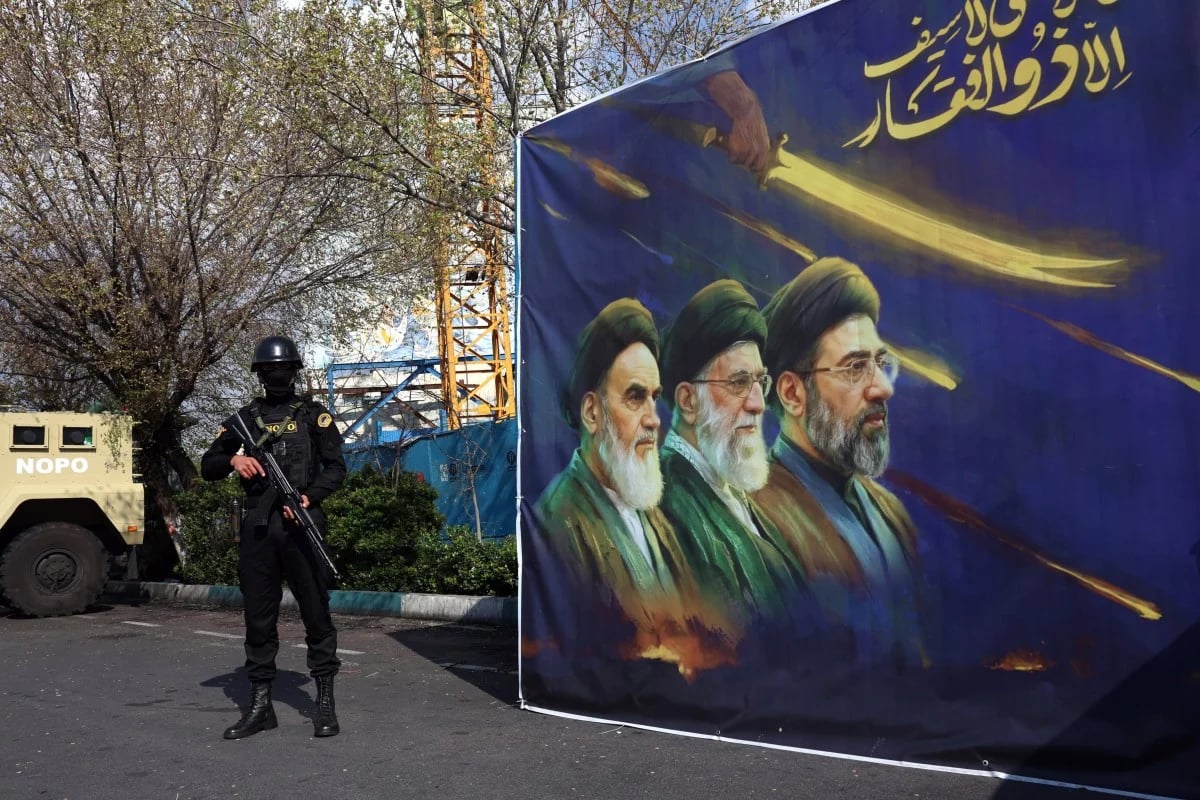
A list of 18 prominent companies, including technology giants like Apple, Google, and Microsoft, finds itself under a new ultimatum as tensions rise between the United States, Israel, and Iran.
The Islamic Revolutionary Guard Corps (IRGC) of Iran has delivered a stark warning, indicating that starting from 8:00 PM Tehran time on Wednesday, April 1, it will begin targeting American tech firms operating in the Middle East. The IRGC accuses these companies of being deeply involved in high-tech warfare, which they claim has led to the deaths of Iranian officials.
In a statement reported by NDTV, the IRGC said, “These companies should expect the destruction of their relevant units in exchange for every assassination in Iran.” The group further urged employees of these companies to leave their workplaces immediately to ensure their safety.
Additionally, the IRGC has extended this warning to civilians living near corporate facilities, advising them to maintain a distance of at least one kilometer from these sites and to seek safer locations.
The List of Targeted Companies
Iran has labeled these firms as the “main element” in the identification and tracking of targets for operations conducted by the US and Israeli forces. The list of 18 entities encompasses nearly all major American technology firms along with aerospace and financial companies.
- Big Tech: Google (Alphabet), Microsoft, Apple, Meta.
- Chips & AI: Nvidia, Intel.
- Infrastructure & Cloud: Oracle, HP, IBM, Cisco, Dell, Palantir.
- Transport & Energy: Tesla, Boeing.
- Finance: J.P. Morgan Chase, GE.
- Regional Players: UAE’s AI firm G42, Dubai-based Spire Solutions.
According to the Times of India, the IRGC’s justification for these threats is based on the belief that American tech firms are now considered legitimate military targets: “Since the main element in designing and tracking terrorist targets are American and ICT [Information and Communications Technology] and AI companies… from now on, [these] main institutions will be our legitimate targets.”
This escalation in threats follows a tumultuous period for the Iranian leadership. Since conflict erupted on February 28, multiple reports have indicated that several high-ranking Iranian officials have been killed, though the specifics and identities of these individuals vary across sources.
Tehran maintains that these “targeted assassinations” were facilitated by high-tech surveillance and AI technologies provided by the companies included in the warning list. The IRGC further stated, “These companies should expect the destruction of their respective units in exchange for each terror act in Iran, starting from 8 PM Tehran time on Wednesday, April 1st.”
There have been unconfirmed reports suggesting that Iranian drones may have targeted Amazon Web Services data centers located in the UAE and Bahrain, which raises concerns regarding the vulnerability of the region’s digital infrastructure to potential physical attacks.
In response to the IRGC's threats, tech companies are implementing contingency plans, with many advising their staff to work remotely. Meanwhile, the geopolitical landscape continues to shift, with US officials, including President Donald Trump, reportedly advocating for diplomatic solutions while simultaneously threatening to “obliterate” Iran’s energy sector if a peace agreement isn’t reached by April 6.
Despite the seriousness of the threats, it remains uncertain how immediate or credible these potential attacks are, although security analysts are closely monitoring the situation.
For further insights on how emerging technology threats are reshaping security dynamics, stay tuned for our analysis of Google’s caution that quantum computing might soon breach modern encryption standards.
Source: TechRepublic News